


Africa, the world’s second-largest and second-most-populous continent, boasts remarkable biodiversity across diverse landscapes. However, delayed industrialization, human activities like deforestation, and prolonged conflicts pose severe threat to its wildlife.
These challenges, exacerbated by climate change, endanger numerous species. Urgent conservation efforts are crucial to safeguard Africa’s endangered animals from irreversible decline.
Different types of African cats
Across the animal kingdom, felines share a solitary, predatory essence. From majestic lions to domestic cats, they are meat-eaters, each uniquely beautiful.
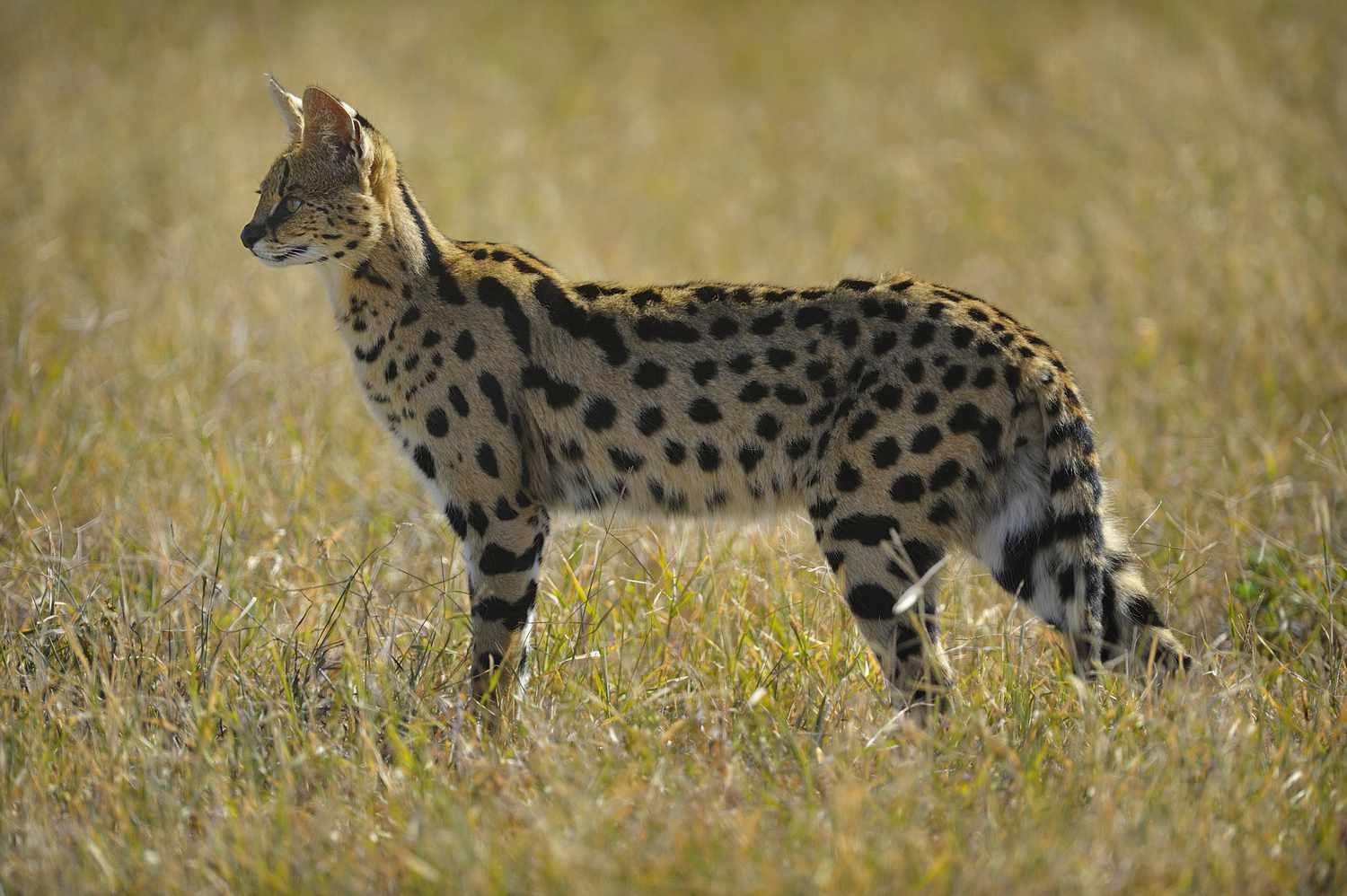
The following are a few of the stunning large and small cats found in Africa.

- African Lion
African lions, hailed as the King of Beasts, reign supreme as the largest cats in Africa. With striking manes ranging from blond to black, males exhibit dominance. These majestic creatures, weighing up to 400 pounds and stretching 8 feet long, boast an average wild lifespan of 10-14 years.
Hunting with stealth and strength, they prefer large prey like
- Antelopes
- Zebras
- Buffalo.
Lions thrive within prides, comprising multiple females, cubs, and protective male lions. Their social structure fosters survival against the dangers of the wild, perpetuating the awe-inspiring legacy of Africa’s iconic predators.

- Leopard
African leopards, with their distinctive spotted coat and powerful physique, are iconic creatures of the continent. Preferring nocturnal solitude, they roam diverse habitats like savannas, forests, and mountains.
Feeding on small mammals and birds, they sometimes scavenge or hunt livestock, leading to conflicts with locals. To evade danger, they adeptly climb trees or conceal themselves in dense foliage, crucial tactics against predators and illegal human hunters seeking their skins and body parts for traditional practices.
Thus, these stealthy hunters navigate a delicate balance between survival and human encroachment in Africa’s varied landscapes.

- Cheetah
In the Serengeti, Tanzania, a female cheetah and her four tiny cubs perch atop a vast termite mound against a smooth backdrop, providing ample copy space.
Known as the fastest land mammal, African cheetahs boast unique features like tear-like stripes and non-retractable claws aiding in their exceptional speed, reaching up to 75 mph. Solitary hunters, they prey on smaller mammals using sharp vision during daylight.
Despite their prowess, habitat loss, fur trade, and competition render them vulnerable, according to the IUCN Red List. Urgent conservation efforts are imperative to safeguard these majestic cats across sub-Saharan Africa.

- African Golden Cat
The African Golden Cat, a medium-sized wildcat indigenous to central and western African rainforests, boasts a stunning golden-brown fur adorned with spots, stripes, and streaks of black.
Growing up to 3 feet long and weighing 15-32 pounds, it is an adept ambush predator preying on small mammals, birds, and reptiles, often scavenging when prey is scarce.
While typically solitary, occasional pairs are observed during mating periods. After a gestation period of approximately 70 days, females typically birth one or two cubs, though larger litters of up to four kittens have been documented.
These behaviors and adaptations highlight the remarkable survival strategies of the African Golden Cat amidst the diverse and challenging habitats of its native rainforests.
In addition to these, there are many other wild cats found in Africa, such as Caracal, Jungle Cat, African Wildcat, Sand Cat, and Black-footed Cat.