


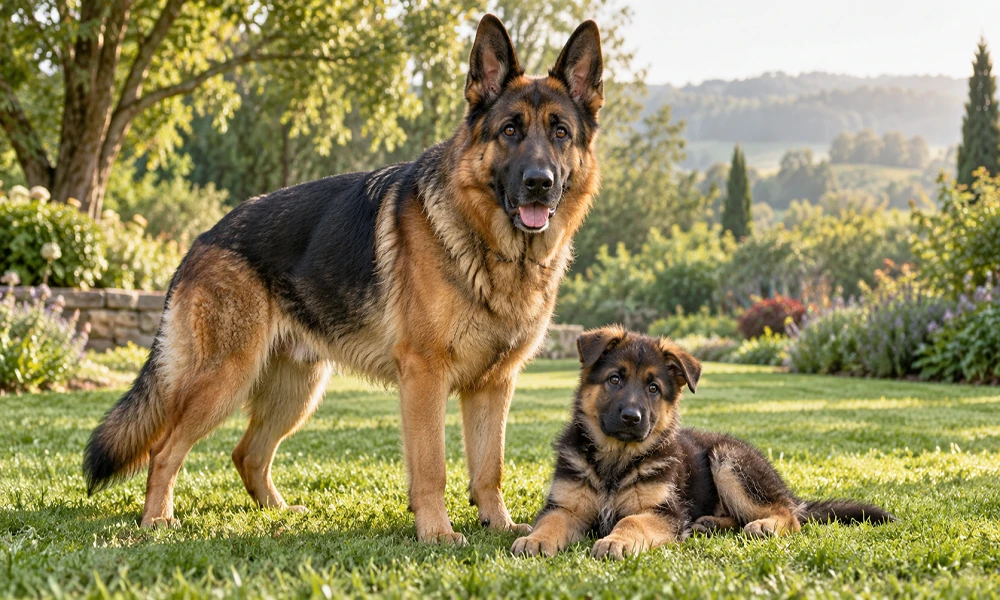
Choosing a puppy starts with a question that photographs cannot answer: what sits behind this litter? A striking coat and an alert expression may catch the eye, but ancestry offers a deeper starting point. A documented pedigree helps buyers explore the dogs behind a pairing, understand the breeder’s priorities, and ask better questions before making a commitment.
For someone considering a working line German Shepherd, that background deserves close attention. The value lies in connecting recorded ancestry with verifiable titles, health results, and observations of individual dogs. Together, those details can make the selection process more informed.
A Clearer Picture of the Dogs Behind the Litter
A pedigree records family relationships. The American Kennel Club’s guide to reading a dog’s pedigree explains how that record traces direct ancestors through successive generations. It gives buyers a framework for researching names and understanding the information attached to them.
“Proven” should mean something specific. Ask which ancestors earned working titles, where those records can be verified, and what the breeder knows about their offspring. A famous name several generations back should open a conversation about evidence.
Czech Working Line describes a breeding focus on imported Czech and East German pedigrees. Its stated priorities include health, trainability, and matching puppies with owners’ needs. Buyers can use those priorities to frame a detailed discussion about a particular pairing.
Working Titles Give Buyers Something Concrete to Examine
Recorded achievements offer more substance than a broad claim that a dog comes from excellent bloodlines. They identify accomplishments associated with particular ancestors and help buyers ask what those accomplishments mean for the proposed litter.
For example, the breeder’s profile for Querro od Hradčanského rybníka lists BH/VT and IGP 1, 2, and 3 titles. A named dog with listed achievements gives prospective owners a useful starting point for requesting supporting records and discussing breeding decisions.
An ancestor’s title belongs to that ancestor. It does not make an untrained puppy a finished working dog. Buyers should ask how the breeder evaluates each youngster’s developing interests and responses, and how those observations influence placement.
Health Records Make Ancestry More Useful
The most valuable pedigree discussion includes health documentation. Ask to see the parents’ actual screening reports, check that the identities match, and discuss the findings with a veterinarian when interpretation is needed.
The Orthopedic Foundation for Animals’CHIC health-screening guidance explains an important distinction: a CHIC number confirms completion and public disclosure of required tests; it does not mean every result was normal. Buyers need to examine the results themselves.
Querro’s published profile lists hip and elbow grades alongside a DM-clear result. These are specific claims buyers can ask the breeder to substantiate with original documentation. Understanding the testing method and the result is more useful than accepting a general description of healthy bloodlines.
Health screening provides information for breeding and buying decisions. It cannot promise that an individual dog will remain free of every health problem throughout life.
Better Questions About Everyday Compatibility
Pedigree also helps direct the conversation toward the home a puppy will join. An owner interested in structured activities may have different expectations from a household seeking an active companion. Both need an honest discussion about time, experience, and daily routines.
The breeder’s About Us page emphasizes selecting dogs with an “off switch,” describing the ability to settle as a priority alongside working ability. That stated goal gives buyers something practical to explore: how do the parents behave at home, and what has been observed in earlier offspring?
Ask about ordinary situations. How does a puppy respond after play? What happens when an unfamiliar object appears? How does it engage with a handler? These questions bring the discussion closer to the individual dog.
A More Thoughtful Decision Before Bringing a Puppy Home
Good records create a foundation for a transparent conversation. Before choosing, request the pedigree, relevant title documentation, parental health reports, and an explanation of why the two dogs were paired. Ask what the breeder has observed about the puppy being recommended.
Keep copies of the information supplied so questions can be revisited before a deposit. A careful breeder conversation should leave the buyer better informed about the choice ahead.
Share the realities of the household, including work schedules, other animals, training plans, and available support. Clear expectations help both sides assess whether a particular youngster is an appropriate match.
The benefit of documented ancestry is a clearer decision grounded in evidence and individual assessment. Before selecting your next German Shepherd puppy, visit czechworkingline.com to discuss pedigrees, parental health documentation, and a suitable litter.