


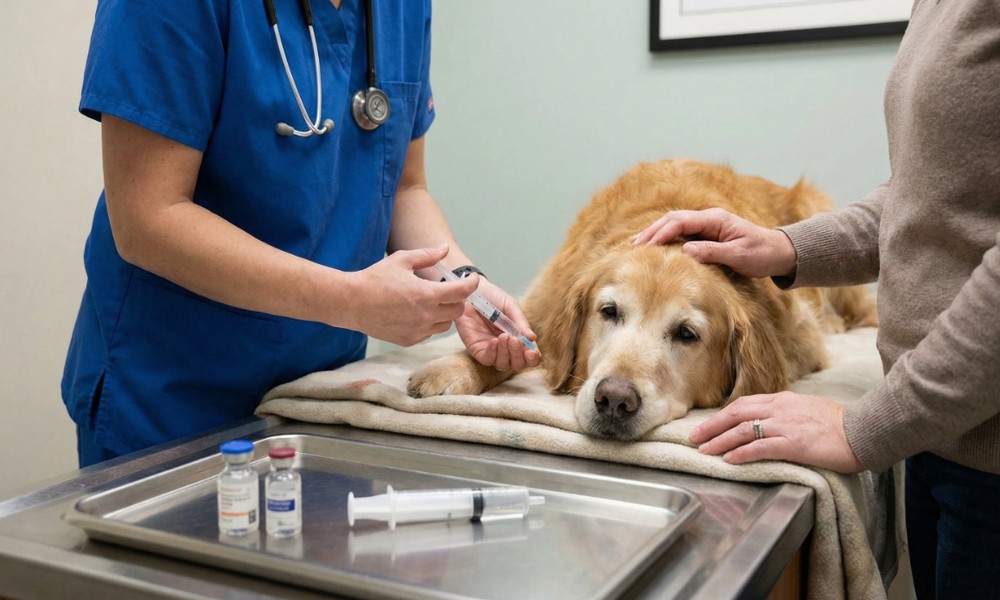
There is a particular kind of grief that settles in before the loss itself – not sharp, but slow. It lives in the moments of carrying a dog upstairs, which it once bounded up alone, or watching a cat sleep through an entire day without once lifting its head. Gold Coast pet euthanasia sits at the centre of that grief, yet most owners arrive at the conversation having never once thought about it until they are already inside it. That unpreparedness is where real suffering – for both pet and owner – tends to take root.
Waiting Feels Like Loyalty
Here is something vets quietly observe but rarely say outright: the owners who wait the longest are often the most devoted. Waiting feels like fighting. Letting go feels like surrender. So families stretch the timeline, telling themselves that a bad week might turn around, that the good moments still outweigh the hard ones. What goes unexamined is whether those “good moments” are genuinely good for the animal or simply the brief windows where pain becomes manageable enough to rest. An animal that stops eating, stops seeking company, and flinches at touch it once welcomed, is communicating something clearly. The difficulty is that love makes that communication very easy to misread.
The Appointment Nobody Prepares For
Most owners walk into a euthanasia appointment without having been told what will actually happen. They expect it to be distressing to watch – and because they expect distress, they sometimes interpret the profound stillness of the process as something having gone wrong. It has not. The animal loses awareness quietly, without struggle. What follows is simply stillness. Owners who were walked through the process beforehand – who knew what each stage looked like before it happened – consistently describe the experience as something they were able to be present for, rather than something that happened to them whilst they stood frozen in the corner. Ask the vet to explain it in plain detail before the appointment. That single conversation changes the entire experience.
The Home Visit Difference
There is a version of this process that happens in a clinical room with fluorescent lighting and the ambient sounds of a busy practice. Then there is the version that happens on a familiar sofa, with the lead hanging by the door and the garden visible through the window. Gold Coast pet euthanasia providers offering home visits are not simply providing a logistical convenience. They are removing the final hour of an animal’s life from an environment associated with anxiety and placing it back inside one associated with safety. For older animals, especially, the journey to a clinic is not a neutral event – it is an ordeal layered on top of everything else the body is already enduring.
What Children Actually Need
Parents tend to protect children from this moment, and the instinct is understandable. What the research quietly suggests, though, is that children who are excluded often construct something far more frightening in their imagination than what actually occurred. A pet that vanishes without explanation leaves a gap that young minds fill in their own way. Children who are gently prepared, given honest and simple language, and allowed to choose whether to be present tend to grieve more straightforwardly. The farewell gives them something to hold onto – a memory with a shape, rather than just an absence.
Guilt Has a Pattern
Almost every owner wonders afterwards whether they moved too soon. Very few openly ask whether they waited too long – but that is the question that tends to resurface months later, in quieter moments. Vets use structured quality-of-life frameworks that measure appetite, pain response, mobility, hygiene, and engagement together. These tools exist precisely because grief distorts perception. They do not decide for anyone, but they replace a feeling with something observable. That distinction matters more than most people realise until they are standing inside it.
Conclusion
Gold Coast pet euthanasia, at its core, is what happens when an owner refuses to let an animal’s final chapter be defined by suffering. The families who carry the least weight afterwards are the ones who sought honest conversations before the crisis point arrived. A peaceful ending requires preparation, not just presence. And for an animal that gave everything it had, preparation is the very least it deserves.