


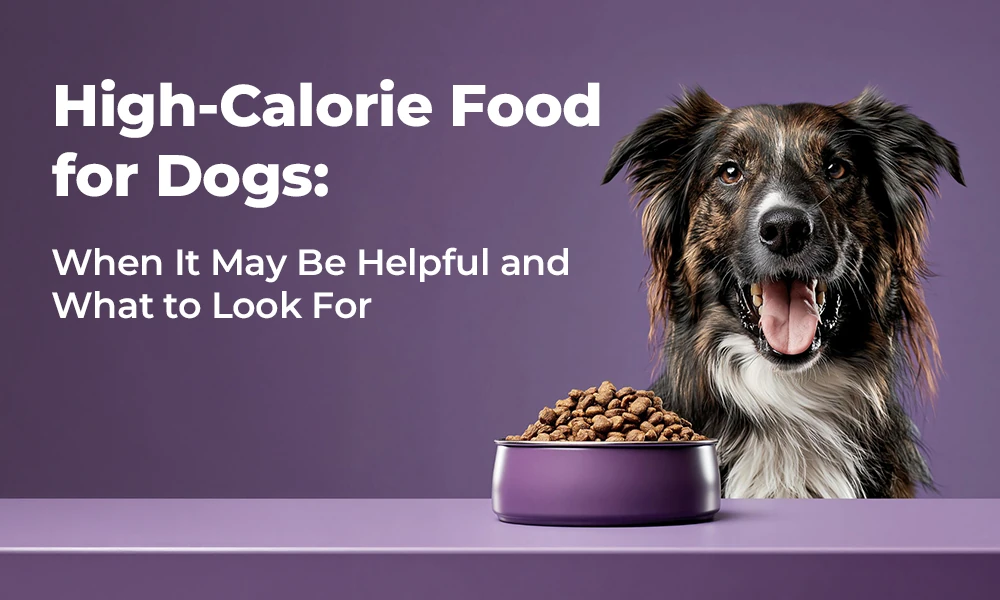
Most dogs stay healthy on a standard, balanced diet. Some dogs, however, need more energy than regular food provides. A high-calorie diet can help in these cases, if it is chosen carefully and used for the right reason. This guide explains when it may be useful and what to check before buying. To explore balanced options for different ages and needs, visit the HardyPaw dog food collection for dry dog food, puppy food, and premium nutrition.
What Is High-Calorie Dog Food?
High-calorie dog food contains more energy in each serving than standard formulas. The extra energy usually comes from higher levels of fat and protein. Because the food is energy-dense, a dog can eat a smaller portion and still receive enough calories. This is helpful for dogs that cannot eat large meals or that burn energy quickly.
When High-Calorie Food May Be Helpful
A higher-calorie diet may suit the following dogs:
- Underweight dogs: A dog below a healthy weight may need extra calories to regain condition. Weight loss can have a medical cause, so a veterinarian should examine the dog first.
- Active and working dogs: Dogs that run, herd, or train for long hours use much more energy than the average pet and often need more calories to maintain their weight.
- Dogs recovering from illness or surgery: Some dogs eat less during recovery but still need enough energy to heal. A veterinarian can advise on the right diet.
- Pregnant or nursing dogs: Energy needs rise during pregnancy and are highest while a dog is nursing puppies.
- Growing puppies: Puppies need more calories for their size than adult dogs. Large-breed puppies, however, need a food made for their size, as too much energy can cause them to grow too quickly.
- Senior dogs with a small appetite: Some older dogs eat very little. A smaller portion of energy-dense food can help them maintain weight.
How to Tell If Your Dog Needs More Calories
Body condition is a better guide than weight alone. You should be able to feel your dog’s ribs easily under a thin layer of fat, and see a visible waist when viewing from above. If the ribs, spine, or hip bones are clearly visible, or if your dog is losing weight without a change in diet, schedule a veterinary visit. Your veterinarian can score body condition and recommend a calorie target suited to your dog.
What to Look For
Check these points on the product label:
- Complete and balanced: The label should state that the food meets the nutritional standards for your dog’s life stage, such as AAFCO guidelines.
- Calorie content: Look for the calories per cup or per kilogram, so you can compare products and measure portions correctly.
- Named protein source: A specific ingredient such as chicken, lamb, or fish should appear near the top of the ingredient list.
- Quality fat sources: Ingredients like chicken fat and fish oil provide energy and omega fatty acids which support skin and coat health.
- Digestibility: Easily digestible ingredients help the dog absorb nutrients and reduce the chance of stomach upset.
- Suitable size and life stage: Choose a formula that suits your dog’s age, breed size, and any health needs.
How to Introduce a New Food
Change the diet gradually over seven to ten days. Begin with a small amount of the new food mixed with the current food, then increase the new portion each day. Follow the feeding guide on the package, and weigh your dog every two weeks to check progress. If you notice vomiting, loose stools, or a loss of appetite contact your veterinarian.
Precautions to Keep in Mind
High-calorie food is not right for every dog. Dogs that are overweight, inactive, or prone to pancreatitis should not be given high-fat diets unless a veterinarian recommends it. Avoid adding table scraps or fatty human foods to increase calories as these can upset digestion and lead to health problems. Always consult with your veterinarian before changing your dog’s diet.
Summing Up
High-calorie food can help underweight, active, recovering, or growing dogs when it is chosen carefully and fed in the right amount. Read the label, introduce the food slowly, and track your dog’s weight. For more pet care products, visit the HardyPaw homepage.
Frequently Asked Questions
Q1: Can I feed high calorie food to a healthy adult dog?
Ans: Usually this is not necessary. A healthy dog with an ideal body condition does well on a standard balanced diet, and extra calories can lead to weight gain.
Q2: How long does it take an underweight dog to gain weight?
Ans: It depends on the dog and the cause of the weight loss. Gradual gain over several weeks is safer than rapid gain and a veterinarian can help set a realistic goal.
Q3: Should I give my dog supplements to add calories?
Ans: Not without veterinary guidance. A complete, balanced food is a safer way to add calories, while unnecessary supplements can throw off the diet’s balance.